
Roof and gutter surveys
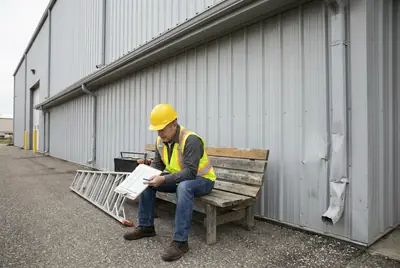
Trough walked end to end, outlets probed, falls checked, every defect photographed and priced in one document.

Property managers across Hughes County put their gutter list in our book: planned interventions, storm callouts and paperwork that holds up.
The call costs nothing and commits you to nothing. Where a survey carries a call-out charge, the coordinator names it before the visit is booked; the proposal follows in writing.
Keeping water away from your foundation prevents expensive structural damage and keeps your workspace safe for everyone. You need a functioning system that diverts heavy rain and melting snow away from the walls and entry points of your property.
Properly maintained channels ensure that moisture stays off your siding and out of your basement or crawl space. That reliability protects your investment and keeps your building dry during the harsh weather cycles found throughout this region. Water intrusion often happens when these metal paths sag or develop small holes that leak onto your walkway.
Checking your downspouts frequently helps you spot minor clogs before they cause overflowing. A clear path for debris prevents the heavy weight of trapped leaves from pulling the hardware away from your roofline. That maintenance step keeps your exterior looking professional and avoids the rot that standing water creates.
Visible sagging or pulling away from the fascia board indicates that your fasteners are failing or overloaded. When you notice standing water near your base, you know the gravity fed system is not moving liquid away fast enough. That persistent moisture leads to mold growth and can actually compromise the structural integrity of your siding over time.
Rust spots or peeling paint near the seams suggest that you have leaks letting water drip directly against your building surface. These cracks often seem tiny, but they allow water to seep behind your siding where you cannot see the damage. Getting a pro to inspect these areas early stops the rot before it requires a total replacement.
Overflowing channels cause soil erosion right next to your foundation, which creates uneven ground and basement leaks. That soil movement threatens your building stability by shifting the dirt beneath your concrete slab or footer. Stopping this erosion now keeps your landscape looking sharp and saves you from dealing with expensive internal water damage later.
Ice dams form easily when melting snow gets trapped in blocked metal channels during the colder months. These frozen barriers force water back under your shingles and into your interior walls, causing major ceiling leaks. Clearing your system before winter hits provides the soothing peace of mind that your roof will handle the heavy snow load without leaking.
Working with someone who understands the local climate in the county ensures your system handles the specific wind and storm patterns we see. Proper installation requires adjusting the slope of the horizontal runs to make sure water flows quickly toward the exits. That precise pitch prevents debris from settling and keeps your drainage moving even during light rains.
High quality materials like seamless aluminum or heavy gauge steel provide the durability you need for long term performance. These metals resist denting and corrosion better than cheaper plastics, which means you spend less time worrying about repairs. Choosing the right thickness for your specific roof size ensures your setup stays attached even during powerful gusty storms.
Asking for a licensed and insured professional protects you from liability should any accidents happen on your property. You should also verify that the crew follows local building codes to ensure the work meets safety requirements for your area. That careful approach means you get high quality results that stand up to the test of time and weather.
Requesting a written estimate allows you to understand exactly what work is needed before the project begins. You can compare the approach of different pros to see who offers the most sensible solution for your unique building layout. Starting with a no obligation quote gives you the freedom to plan your budget without any pressure.
| Common Issue | Potential Benefit of Repair |
| Sagging Channels | Prevents structural wood rot |
| Leaking Seams | Stops wall and siding stains |
| Clogged Downspouts | Protects your foundation from water pooling |
| Loose Fasteners | Ensures building safety during high winds |
Addressing these small repairs today prevents a much larger bill when things finally give way during a major storm. You deserve a building that stays dry and looks clean throughout the changing seasons. Taking care of your roof drainage components now keeps your daily operations running smoothly and avoids unexpected downtime.
Simply describe your project needs to receive a free quote from a local specialist ready to help. That quick step connects you with pros who understand the unique needs of commercial properties in this part of South Dakota. Getting a professional assessment helps you make the right choice for your building today.
Reach out now to get your maintenance plan started and secure your property against the elements. Your building works hard for you, so give it the protection it needs to stay solid for years to come. A little bit of preventative care goes a long way toward keeping your commercial space in top shape.
Long steel eaves and valley troughs that drain acres of roof. One failed outlet here does not stain a ceiling, it shuts an aisle. We keep the runs flowing and the racking dry.
Water over a shopfront costs trade the same hour it starts. Cleaning rounds land before the leaves do, and repairs go in before opening or after close.
Parapet and internal gutters above occupied floors call for quiet, planned work. Tenants get a notice, the manager gets a report, the leak gets an end date.
Gym halls, canteens and covered walkways with drainage nobody looks at until it drips on a corridor. Term breaks and weekends are when our lifts show up.
Boards need one accountable contractor, one schedule and paperwork the AGM can read. We price the whole set of buildings and report on each one separately.
Sites that never close and cannot smell of sealant in the morning. Work is staged wing by wing, agreed with facilities, documented for the operator.
Slide through the six lines of work. Every one ends with photos in your inbox.
Trough walked end to end, outlets probed, falls checked, every defect photographed and priced in one document.
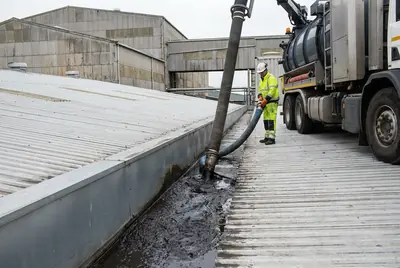
Eaves and internal gutters cleared on agreed dates, debris bagged and off site, downpipes flushed until they run.
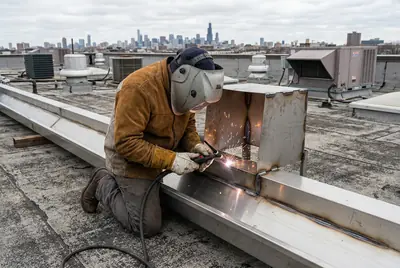
Split seams cut out and rewelded or resealed, movement joints rebuilt so thermal cycling stops reopening them.
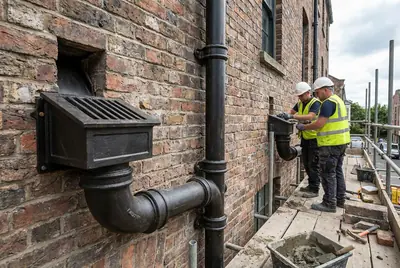
Blocked heads rodded or replaced, leaf grates fitted, discharge checked all the way to the drain it feeds.
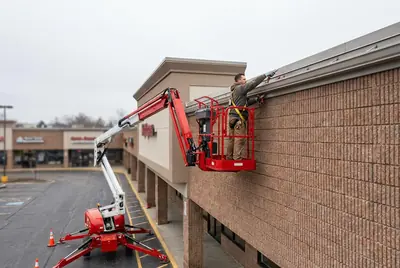
Boom and scissor lifts sized to the yard, harnessed operators, exclusion zones agreed with the site before wheels arrive.
Fixed visits, storm priority and one renewal date across a whole portfolio, with a file of reports behind every building.
Plenty of buildings only need us once. The ones with tenants, deadlines and insurance renewals tend to prefer a standing arrangement. Here is the difference, plainly.
| One-off intervention | Service contract | |
|---|---|---|
| When something leaks | You call, we schedule the next open slot | Contract sites jump the queue, with a target response written into the agreement |
| How the price works | Quoted per intervention, after a survey | Fixed annual figure for the planned rounds, agreed rates for anything extra |
| Reporting | One photo report for the visit | A running file per building: condition notes, dates, photos and what to budget next |
| When storms roll through | Callouts taken in the order they land | Your buildings are checked and cleared first, before the phones start |
Contracts run per building or across a portfolio, and either way you keep one coordinator and one renewal date.
One call to (855) 629-1449 books the visit. A surveyor then walks the roof, meters the troughs, photographs defects and asks how the building trades before proposing anything.
Scope, price, access plan and dates on one document, inside 24 business hours. It names what can wait, too.
Crews arrive in the agreed window, nights or weekends where the site needs them, with insurance papers already sent ahead.
Before and after shots, quantities used and anything spotted for next time, filed to whoever signs the invoices.
| Line of work | Usual bracket | Behind the number |
|---|---|---|
| Survey and condition report | Named on the call | Defects, photos, quantities and a plan you can act on with anyone; any call-out charge is stated before the visit. |
| Contract cleaning, eaves and troughs | $2 - $5 / lin ft | Per round, debris removed from site, downpipes flushed through. |
| Joint and seam resealing | $9 - $19 / lin ft | Leaking laps cut back, cleaned and rebuilt along the affected length. |
| Trough relining, metal or membrane | $26 - $58 / lin ft | The right liner for the trough and the budget, stated in the proposal. |
| Overflow emergency callout | $380 - $950 | Attendance, clearing the blockage and making the run safe until the planned fix. |
Eaves height, roof access and how many seasons of debris are sitting in the trough all move these brackets. The survey pins them down, and hearing the figure commits you to nothing.
Commercial gutters live at commercial heights, so the boring parts of this trade are the ones we take most seriously. Crews work from boom lifts, scissor lifts or fixed edge protection depending on the building, harnessed where the roof demands it, and the access plan is written into the proposal rather than improvised in the yard on the morning.
We carry the insurance a landlord expects a roof contractor to carry, and certificates and attestations go out on request before anyone mobilizes. Where a site runs inductions, badges or permit-to-work rules, tell the coordinator once and every crew we send after that arrives already knowing the drill. The paperwork is never the obstacle; a wet stockroom is.
Yes, and most of our work runs that way. Purchase order references go on the proposal and the invoice, payment terms are agreed before the first visit, and a portfolio can be billed per building or on one consolidated account, whichever your bookkeeping prefers.
Ask the coordinator and it lands in your inbox before the crew is scheduled. Landlords, agents and principal contractors all get the same documents, made out the way their lease or contract requires.
Yes. Retail, healthcare and busy loading yards often leave no other choice, so off-hours windows are part of the proposal, not a surcharge sprung on you later. The site tells us when it can breathe and we plan inside that.
Almost never. Gutter work happens from the roof and from lifts standing outside the walls, so the inside of the building keeps running. Where an internal gutter does force access from within, it is planned with your facility contact around the operations below.
Inside 24 business hours of the survey. It covers scope, price, access and dates in one document, and it is written so a board or an owner who never saw the roof can still follow the reasoning.
That is what most of our contracts do. Each building keeps its own schedule, condition file and reports, while the portfolio shares one coordinator, one rate card and one renewal date.
Terrain first, addresses second: the linked pages beneath the map spell out each community a crew can be routed to from this base.
One survey puts your building on the route sheet. The rest is planning.
Call (855) 629-1449