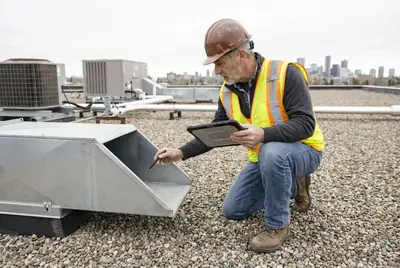
Roof and gutter surveys
Trough walked end to end, outlets probed, falls checked, every defect photographed and priced in one document.

Repairs, relines and cleaning contracts for the gutters above warehouses, shops, offices and multifamily blocks. Managed for the manager, planned around the site, reported in writing.
Dealing with leaky gutters on your commercial property can feel like a never-ending drip-drip-drip of problems. You know that a small issue now can turn into a massive headache later, impacting your operations and your bottom line. This guide will walk you through why keeping those essential water management systems in tip-top shape is crucial and what you need to know when it's time for some expert attention right here in the sprawling United States.
Let's face it, when you're running a business, your mind is on a million things: customers, staff, inventory, profits. Those long, sloped metal channels running along the edge of your roof probably aren't at the top of your to-do list, at least not until something goes wrong. But here's the deal, those seemingly simple systems are your building's first line of defense against water damage, and when they falter, the consequences can be… well, messy.
Think about it this way: your business building, whether it's a bustling retail space, a busy office complex, or a sprawling warehouse, is a significant investment. Protecting that investment means paying attention to all its components, even the ones you don't see every day. When these rainwater channels aren't doing their job effectively, water that should be safely guided away from your foundation can start pooling where it shouldn't. This can lead to all sorts of nasty issues, from water stains on your exterior walls to more serious structural problems down the road.
Furthermore, you probably have a lot of valuable equipment or inventory inside your commercial space. Imagine the damage a persistent leak can cause to electronics, stock, or even just office furniture. It's not just about the building itself; it's about protecting everything that makes your business run. This is why keeping those crucial water diversion systems in good working order isn't just a maintenance task; it's a vital part of safeguarding your entire operation.
So, what kinds of issues typically crop up with these large-scale water management systems? You might notice sagging sections, which are a clear sign that the supports are giving way or that the channels are overloaded. This often happens because of accumulated debris like leaves, twigs, and other bits of nature that find their way onto your roof and into the channels. When these get compacted, they hold water, adding significant weight.
Another common problem is leaking seams. Over time, the joints where sections of the channels meet can degrade, allowing water to escape. This can happen due to expansion and contraction from temperature changes or simply due to wear and tear. You might see rust forming around these seams, which is never a good sign and indicates that protective coatings have failed.
Then there are the downspouts, those vertical pipes that carry the water away. Clogs are incredibly frequent here, especially after heavy rains or windy conditions. A blocked downspout means water has nowhere to go, backing up into the channels and potentially overflowing right down your building's walls. This uncontrolled water flow can lead to erosion around your foundation, a problem that can be incredibly expensive to fix. It's like a tiny, localized flood happening right where you least want it.
Ignoring minor issues with your commercial rainwater collection system is a bit like playing a game of financial roulette. That small drip you see today could be the precursor to a cascade of expensive repairs tomorrow. Think about the potential for water damage to your building's structure. Persistent moisture can compromise wooden beams, cause plaster to crumble, and even lead to mold growth, which is a health hazard and can be incredibly difficult and costly to remediate.
The exterior of your building is also at risk. Uncontrolled water runoff can stain siding, damage paintwork, and even erode mortar in brick buildings. These aesthetic issues can make your business look neglected, which isn't the impression you want to give to customers or potential clients. It's the little details that can sometimes speak volumes about how well a business is managed, and a well-maintained exterior certainly sends a positive message.
Beyond the structural and cosmetic concerns, there are also the direct impacts on your business operations. If water starts seeping into your building, it can damage inventory, disrupt sensitive electronic equipment, or create unsafe walking conditions for your employees and customers. In a place like the United States, with its diverse weather patterns, having a reliable system to manage rainwater is not just about preservation; it's about ensuring continuity of business.
Recognizing the signs that your commercial property's water management system needs attention is key. Sagging, pooling water, visible rust or corrosion, and water stains on the exterior walls are all red flags. If you notice any of these issues, it's time to consider professional help. Trying to handle extensive repairs yourself on a commercial property can be dangerous and often leads to less-than-ideal results.
Professionals specializing in these large-scale water diversion systems have the experience, tools, and knowledge to diagnose problems accurately and implement effective solutions. They understand the specific requirements of commercial buildings, which are often much larger and more complex than residential structures. This means they know how to select the right materials, ensure proper slope and drainage, and install systems that can withstand the elements for years to come.
Moreover, working with a reputable service provider means you get access to specialized equipment like high-reach lifts and safety gear, ensuring the job is done safely and efficiently. They can also advise you on the best types of materials and configurations for your specific building and climate, helping you make informed decisions that will benefit your business in the long run. It's about getting a solution that's built to last and performs exactly as it should.
Taking a proactive approach to maintaining your commercial property's rainwater control systems can save you a significant amount of hassle and money down the line. Regular inspections, even when everything seems to be working fine, can help catch small issues before they escalate into major problems. Think of it like getting your car serviced regularly; it prevents breakdowns and keeps things running smoothly.
By scheduling periodic check-ups, you can ensure that debris is cleared out, minor leaks are sealed, and supports are tightened. This prevents the buildup of weight that can cause sagging and also stops water from getting into places it shouldn't. A little bit of preventative care can significantly extend the lifespan of your existing system and prevent costly emergency repairs. It's a strategy that pays dividends.
Furthermore, well-maintained systems contribute to the overall health and longevity of your building. They protect your foundation from water damage, prevent mold and mildew growth, and help maintain the aesthetic appeal of your property. In a place like the United States, where weather can be unpredictable, having reliable water management is a critical component of responsible property ownership.
When you reach out to us for your commercial property's water diversion needs, you can expect a streamlined and professional experience. Our process begins with a thorough on-site assessment. We'll meticulously inspect your entire system, from the highest points of your roofline down to the discharge points, looking for any signs of wear, damage, or potential issues. We understand that every building is unique, and we take the time to understand yours.
Following this inspection, we'll provide you with a detailed and transparent breakdown of any necessary repairs or maintenance. This isn't just a quick glance; we'll explain exactly what we've found, why it's a concern, and what solutions we recommend. Our goal is to empower you with the information you need to make the best decision for your business. You'll receive a comprehensive estimate outlining the scope of work, materials used, and the total investment.
We pride ourselves on our clear communication throughout the entire process. You won't be left guessing about what's happening. Our team is equipped with the specialized tools and expertise to handle a wide range of issues, ensuring that your project is completed efficiently and to the highest standards. We aim to minimize disruption to your business operations, working with you to schedule service at a time that is most convenient.
The materials used in commercial rainwater management systems play a huge role in their durability and effectiveness. You'll typically find options like aluminum, galvanized steel, and sometimes even copper. Aluminum is a popular choice because it's lightweight, resistant to rust, and can be coated in various colors to match your building's aesthetic. This means it offers good protection without adding excessive weight to your structure.
Galvanized steel is known for its strength and affordability. It's a robust option that can withstand harsher conditions, though it may eventually be susceptible to rust if the protective zinc coating is compromised. For businesses where budget is a primary concern, galvanized steel often provides a very good balance of cost and performance. It's a workhorse material that gets the job done reliably.
Copper, while a more premium option, offers exceptional longevity and a distinctive appearance. It develops a beautiful patina over time and is highly resistant to corrosion. If you're looking for a long-term, high-end solution and want to add a touch of distinction to your property, copper can be an excellent, albeit pricier, choice. Its inherent durability means it can last for decades with minimal maintenance.
Even the best materials can fail if they aren't installed correctly. Proper installation is arguably the most critical factor in ensuring the longevity and effectiveness of your commercial rainwater system. This involves ensuring the correct slope so water flows smoothly towards the downspouts, secure attachment of brackets to handle heavy loads, and tight sealing of all seams to prevent leaks. A slight error in slope can lead to standing water, which is never good.
Experienced installers understand the nuances of different roof types and building structures. They know how to integrate the system seamlessly, preventing potential points of weakness. This attention to detail is what separates a good installation from a mediocre one, and it directly impacts how well your system performs during heavy rainfall and over the years. You want it to look good and, more importantly, to work flawlessly.
When you choose a professional service provider, you're investing in peace of mind. You can be confident that the work is being done by individuals who understand the technical demands of commercial installations. This professional approach not only ensures a functional system but also helps protect your property from costly water-related damage, offering a sound return on your investment. It's about getting it right the first time.
Living in the United States means experiencing a wide range of weather conditions, from torrential downpours in some regions to heavy snow loads in others. Your commercial property's water management system needs to be robust enough to handle your specific local climate. For areas that experience heavy rainfall, ensuring adequate capacity and flow rate is paramount. This means having appropriately sized channels and downspouts that can handle large volumes of water quickly.
In regions prone to freezing temperatures and snow, the design and installation become even more critical. Ice dams can form, causing significant damage to both the gutters and the roof edge. Professionals will consider how to mitigate these risks, perhaps through strategic placement of downspouts or ensuring there are no low spots where water can collect and freeze. Protecting your building from the harsh realities of winter is just as important as protecting it from summer storms.
Understanding these local environmental factors allows us to recommend the most suitable materials and configurations for your property. We don't offer a one-size-fits-all solution because we know that what works in one part of the country might not be ideal in another. Our aim is to provide a system that is perfectly tailored to the unique challenges presented by your location and your building.
When you're faced with the prospect of commercial gutter repair or replacement, you need a team you can trust. We are dedicated to providing reliable, high-quality services to businesses throughout the United States. Our commitment is to ensure your property is protected from water damage, helping you avoid costly repairs and maintain a professional image. We believe in clear, honest communication and delivering exceptional results.
We understand that running a business is demanding, and dealing with property maintenance issues can be an unwelcome distraction. That's why we strive to make the process as smooth and hassle-free as possible for you. From the initial assessment to the final cleanup, our team works diligently to minimize disruption and ensure your satisfaction. Your peace of mind is our priority.
Don't let water damage compromise your investment. Reach out to us today for a free, no-obligation quote and let us help you keep your business protected. We're here to provide the expert solutions your commercial property needs to thrive, no matter the weather.
Long steel eaves and valley troughs that drain acres of roof. One failed outlet here does not stain a ceiling, it shuts an aisle. We keep the runs flowing and the racking dry.
Water over a shopfront costs trade the same hour it starts. Cleaning rounds land before the leaves do, and repairs go in before opening or after close.
Parapet and internal gutters above occupied floors call for quiet, planned work. Tenants get a notice, the manager gets a report, the leak gets an end date.
Gym halls, canteens and covered walkways with drainage nobody looks at until it drips on a corridor. Term breaks and weekends are when our lifts show up.
Boards need one accountable contractor, one schedule and paperwork the AGM can read. We price the whole set of buildings and report on each one separately.
Sites that never close and cannot smell of sealant in the morning. Work is staged wing by wing, agreed with facilities, documented for the operator.
Slide through the six lines of work. Every one ends with photos in your inbox.
Trough walked end to end, outlets probed, falls checked, every defect photographed and priced in one document.
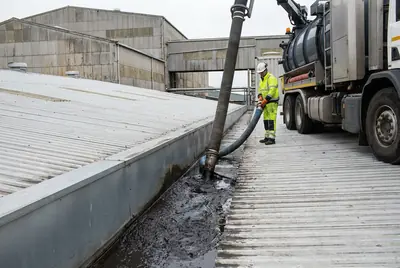
Eaves and internal gutters cleared on agreed dates, debris bagged and off site, downpipes flushed until they run.
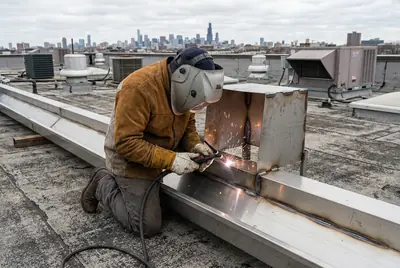
Split seams cut out and rewelded or resealed, movement joints rebuilt so thermal cycling stops reopening them.
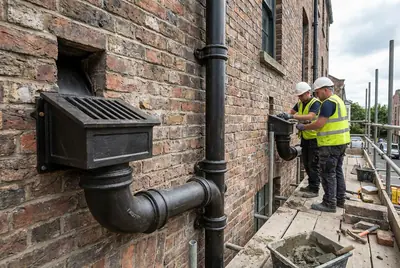
Blocked heads rodded or replaced, leaf grates fitted, discharge checked all the way to the drain it feeds.
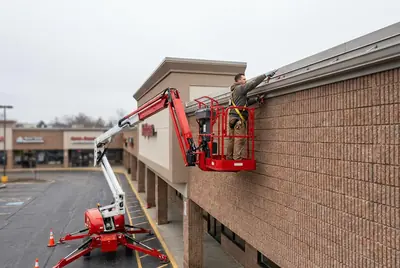
Boom and scissor lifts sized to the yard, harnessed operators, exclusion zones agreed with the site before wheels arrive.
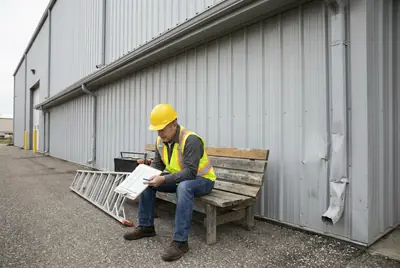
Fixed visits, storm priority and one renewal date across a whole portfolio, with a file of reports behind every building.
Plenty of buildings only need us once. The ones with tenants, deadlines and insurance renewals tend to prefer a standing arrangement. Here is the difference, plainly.
| One-off intervention | Service contract | |
|---|---|---|
| When something leaks | You call, we schedule the next open slot | Contract sites jump the queue, with a target response written into the agreement |
| How the price works | Quoted per intervention, after a survey | Fixed annual figure for the planned rounds, agreed rates for anything extra |
| Reporting | One photo report for the visit | A running file per building: condition notes, dates, photos and what to budget next |
| When storms roll through | Callouts taken in the order they land | Your buildings are checked and cleared first, before the phones start |
Contracts run per building or across a portfolio, and either way you keep one coordinator and one renewal date.
A surveyor walks the roof, meters the troughs, photographs defects and asks how the building trades before proposing anything.
Scope, price, access plan and dates on one document, inside 24 business hours. It names what can wait, too.
Crews arrive in the agreed window, nights or weekends where the site needs them, with insurance papers already sent ahead.
Before and after shots, quantities used and anything spotted for next time, filed to whoever signs the invoices.
| Line of work | Usual bracket | Behind the number |
|---|---|---|
| Survey and condition report | No charge | Defects, photos, quantities and a plan you can act on with anyone. |
| Contract cleaning, eaves and troughs | $2 - $5 / lin ft | Per round, debris removed from site, downpipes flushed through. |
| Joint and seam resealing | $9 - $19 / lin ft | Leaking laps cut back, cleaned and rebuilt along the affected length. |
| Trough relining, metal or membrane | $26 - $58 / lin ft | The right liner for the trough and the budget, stated in the proposal. |
| Overflow emergency callout | $380 - $950 | Attendance, clearing the blockage and making the run safe until the planned fix. |
Eaves height, roof access and how many seasons of debris are sitting in the trough all move these brackets. The survey pins them down, and the survey costs nothing.
Commercial gutters live at commercial heights, so the boring parts of this trade are the ones we take most seriously. Crews work from boom lifts, scissor lifts or fixed edge protection depending on the building, harnessed where the roof demands it, and the access plan is written into the proposal rather than improvised in the yard on the morning.
We carry the insurance a landlord expects a roof contractor to carry, and certificates and attestations go out on request before anyone mobilizes. Where a site runs inductions, badges or permit-to-work rules, tell the coordinator once and every crew we send after that arrives already knowing the drill. The paperwork is never the obstacle; a wet stockroom is.
Yes, and most of our work runs that way. Purchase order references go on the proposal and the invoice, payment terms are agreed before the first visit, and a portfolio can be billed per building or on one consolidated account, whichever your bookkeeping prefers.
Ask the coordinator and it lands in your inbox before the crew is scheduled. Landlords, agents and principal contractors all get the same documents, made out the way their lease or contract requires.
Yes. Retail, healthcare and busy loading yards often leave no other choice, so off-hours windows are part of the proposal, not a surcharge sprung on you later. The site tells us when it can breathe and we plan inside that.
Almost never. Gutter work happens from the roof and from lifts standing outside the walls, so the inside of the building keeps running. Where an internal gutter does force access from within, it is planned with your facility contact around the operations below.
Inside 24 business hours of the survey. It covers scope, price, access and dates in one document, and it is written so a board or an owner who never saw the roof can still follow the reasoning.
That is what most of our contracts do. Each building keeps its own schedule, condition file and reports, while the portfolio shares one coordinator, one rate card and one renewal date.
Rain load, roof styles and freeze cycles differ by state; the way we plan, report and answer for a building does not. Find where your buildings sit in the lists below.
Tenants notice a leak the day it starts. Nobody notices a gutter under contract.
Request service