
Roof and gutter surveys
Trough walked end to end, outlets probed, falls checked, every defect photographed and priced in one document.

Buildings in Stanton sit on our route sheet for Orange County: surveyed, repaired and cleaned under contract, with a report after every visit.
The call costs nothing and commits you to nothing. Where a survey carries a call-out charge, the coordinator names it before the visit is booked; the proposal follows in writing.
Keeping your roof edges clear stops water from destroying your walls. You find local pros ready to send a free quote when you describe your project. That simple step prevents expensive damage throughout the Orange County area.
These metal or vinyl runs catch every drop of rain falling on your roof. This system directs water away from your foundation and siding to avoid rot. A working setup keeps your building dry and safe from moisture buildup.
Because water weight puts stress on the mounting brackets, a loose section needs fast attention. This failure often leads to water overflowing onto walkways near your storefront. That hazard creates slippery spots which could cause legal trouble for any owner.
You should look for cracks or sagging parts whenever a storm hits the region. Visible leaks mean your hardware has lost its seal or alignment over time. Catching these spots early keeps your repair costs low and manageable for your budget.
Since your neighborhood experiences varied weather patterns, debris often clogs these pathways. This blockage forces water to pool up behind the metal rim instead of flowing down. That extra weight can pull the whole structure away from your building frame.
| Problem | Typical Sign | Result |
| Loose Fasteners | Sagging sections | Water pooling |
| Broken Seals | Slow dripping | Wall stains |
| Full Debris | Overflowing sides | Soil erosion |
Any good pro in the 90680 zip code should be licensed and fully insured. This protection keeps you safe from liability while they work on your structure. Always ask for a written warranty to ensure quality work for your peace of mind.
Furthermore, verify they know the local drainage codes for this part of California. A team that understands these specific rules provides a level of structural stability that lasts. That expertise ensures your metal channels handle the heavy flow during peak storms.
Properly attached roof edge systems protect your exterior finish from peeling or mold. This investment keeps the resale value high for your property around here. You gain a huge advantage by stopping small leaks before they grow into disasters.
Now you can act by asking for a free quote from nearby technicians. This no-obligation process lets you compare options for your building maintenance needs. Simply describe the scope of your project to get started right away.
Choosing a team involves looking for someone who offers responsive support for local businesses. You want a provider who understands the needs of a city with nearly forty thousand residents. That local knowledge makes the difference in how they handle your drainage infrastructure.
Besides that, look for crews that use high-grade sealants to prevent future leaks. These materials provide a weatherproof barrier that stands up to the hot sun and sudden rain. That resilience ensures your property stays in top shape for many seasons.
Regular checks on your water management hardware save you time and massive stress. You avoid the high cost of foundation repairs by fixing a leaky seam today. This proactive approach keeps your investment secure and fully functional without any delay.
Also, consider the material of your current roof runoff equipment when planning upgrades. Aluminum is popular for its lightweight build and rust resistance in our climate. Which means you can expect long-term durability from a well-installed setup on your exterior.
Long steel eaves and valley troughs that drain acres of roof. One failed outlet here does not stain a ceiling, it shuts an aisle. We keep the runs flowing and the racking dry.
Water over a shopfront costs trade the same hour it starts. Cleaning rounds land before the leaves do, and repairs go in before opening or after close.
Parapet and internal gutters above occupied floors call for quiet, planned work. Tenants get a notice, the manager gets a report, the leak gets an end date.
Gym halls, canteens and covered walkways with drainage nobody looks at until it drips on a corridor. Term breaks and weekends are when our lifts show up.
Boards need one accountable contractor, one schedule and paperwork the AGM can read. We price the whole set of buildings and report on each one separately.
Sites that never close and cannot smell of sealant in the morning. Work is staged wing by wing, agreed with facilities, documented for the operator.
Slide through the six lines of work. Every one ends with photos in your inbox.
Trough walked end to end, outlets probed, falls checked, every defect photographed and priced in one document.
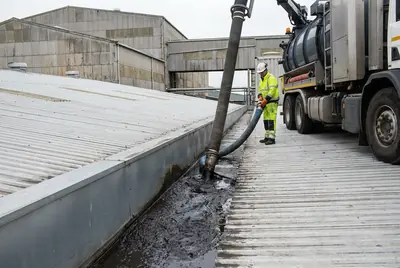
Eaves and internal gutters cleared on agreed dates, debris bagged and off site, downpipes flushed until they run.
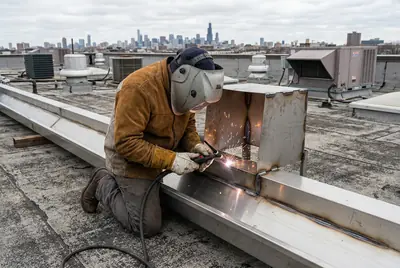
Split seams cut out and rewelded or resealed, movement joints rebuilt so thermal cycling stops reopening them.
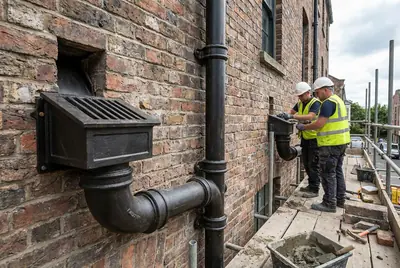
Blocked heads rodded or replaced, leaf grates fitted, discharge checked all the way to the drain it feeds.
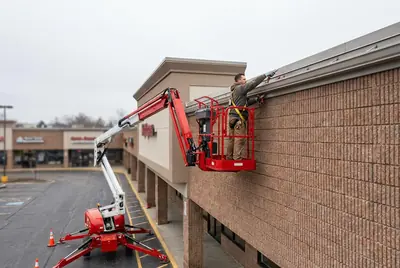
Boom and scissor lifts sized to the yard, harnessed operators, exclusion zones agreed with the site before wheels arrive.
Fixed visits, storm priority and one renewal date across a whole portfolio, with a file of reports behind every building.
Plenty of buildings only need us once. The ones with tenants, deadlines and insurance renewals tend to prefer a standing arrangement. Here is the difference, plainly.
| One-off intervention | Service contract | |
|---|---|---|
| When something leaks | You call, we schedule the next open slot | Contract sites jump the queue, with a target response written into the agreement |
| How the price works | Quoted per intervention, after a survey | Fixed annual figure for the planned rounds, agreed rates for anything extra |
| Reporting | One photo report for the visit | A running file per building: condition notes, dates, photos and what to budget next |
| When storms roll through | Callouts taken in the order they land | Your buildings are checked and cleared first, before the phones start |
Contracts run per building or across a portfolio, and either way you keep one coordinator and one renewal date.
One call to (855) 629-1449 books the visit. A surveyor then walks the roof in Stanton, meters the troughs, photographs defects and asks how the building trades before proposing anything.
Scope, price, access plan and dates on one document, inside 24 business hours. It names what can wait, too.
Crews arrive in the agreed window, nights or weekends where the site needs them, with insurance papers already sent ahead.
Before and after shots, quantities used and anything spotted for next time, filed to whoever signs the invoices.
| Line of work | Usual bracket | Behind the number |
|---|---|---|
| Survey and condition report | Named on the call | Defects, photos, quantities and a plan you can act on with anyone; any call-out charge is stated before the visit. |
| Contract cleaning, eaves and troughs | $2 - $5 / lin ft | Per round, debris removed from site, downpipes flushed through. |
| Joint and seam resealing | $9 - $19 / lin ft | Leaking laps cut back, cleaned and rebuilt along the affected length. |
| Trough relining, metal or membrane | $26 - $58 / lin ft | The right liner for the trough and the budget, stated in the proposal. |
| Overflow emergency callout | $380 - $950 | Attendance, clearing the blockage and making the run safe until the planned fix. |
Eaves height, roof access and how many seasons of debris are sitting in the trough all move these brackets. The survey pins them down, and hearing the figure commits you to nothing.
Commercial gutters live at commercial heights, so the boring parts of this trade are the ones we take most seriously. Crews work from boom lifts, scissor lifts or fixed edge protection depending on the building, harnessed where the roof demands it, and the access plan is written into the proposal rather than improvised in the yard on the morning.
We carry the insurance a landlord expects a roof contractor to carry, and certificates and attestations go out on request before anyone mobilizes. Where a site runs inductions, badges or permit-to-work rules, tell the coordinator once and every crew we send after that arrives already knowing the drill. The paperwork is never the obstacle; a wet stockroom is.
Yes, and most of our work runs that way. Purchase order references go on the proposal and the invoice, payment terms are agreed before the first visit, and a portfolio can be billed per building or on one consolidated account, whichever your bookkeeping prefers.
Ask the coordinator and it lands in your inbox before the crew is scheduled around Stanton. Landlords, agents and principal contractors all get the same documents, made out the way their lease or contract requires.
Yes. Retail, healthcare and busy loading yards often leave no other choice, so off-hours windows are part of the proposal, not a surcharge sprung on you later. The site tells us when it can breathe and we plan inside that.
Almost never. Gutter work happens from the roof and from lifts standing outside the walls, so the inside of the building keeps running. Where an internal gutter does force access from within, it is planned with your facility contact around the operations below.
Inside 24 business hours of the survey. It covers scope, price, access and dates in one document, and it is written so a board or an owner who never saw the roof can still follow the reasoning.
That is what most of our contracts do. Each building keeps its own schedule, condition file and reports, while the portfolio shares one coordinator, one rate card and one renewal date.
Terrain first, addresses second: the linked pages beneath the map spell out each community a crew can be routed to from this base.
| Standing | Incorporated place |
|---|---|
| ZIP codes | 90680 |
| Population | 38,509 |
| Land area | 3.1 sq mi |
| Density | 12,410 residents per sq mi |
| Median household income | $56,506 |
| County | Orange County |
| State | California |
| Census region | West |
| Country | United States |
| Wikipedia | https://en.wikipedia.org/wiki/Stanton,_California |
One survey puts your building on the route sheet. The rest is planning.
Call (855) 629-1449